
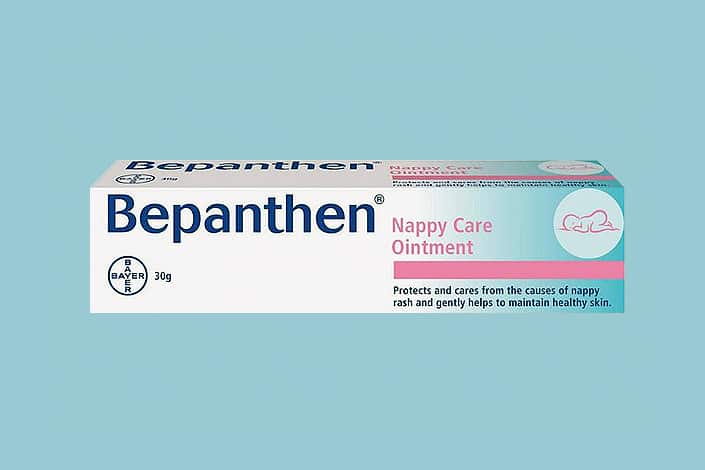
Wanting to know is Bepanthen for Tattoos safe and a beneficial aftercare product to use ? Will Bepanthen damage your Tattoo?
What is the best aftercare product to use on Tattoos? If wanting to know more please keep reading on. Many Tattoo artists recommend Bepanthen for your Tattoo as being the best option you can choose.
Is Bepanthen really a good product to use on Tattoos ? if so, why is it so good ? but what if it is not ? what makes using Bepanthen for your Tattoos so bad ?
These are just some of the questions, that i will reveal about using Bepanthen which has been recommended for many years as a Tattoo aftercare product.
In today’s guide, you will learn everything there is to know about Bepanthen. After reading this guide, you will be able to make an educated choice whether Bepanthen should be used on your Tattoos.
What Is Bepanthen ? What Was It Made For ? Is It Good For Healing Tattoos?
Bepanthen is a moisturiser cream created primarily for diaper rash, now being used by many as a Tattoo ointment.
Bepanthen has been around since 1945, originating in Switzerland. It was used on nappy rash and regularly used in hospitals around the world.
Due to the history of Bepanthen, it has been assumed that this brand is also great for Tattoo aftercare, being such a trusted name by our mothers & grandmothers.
One important question is ? do our Mothers & Grandmothers know, what actually is in Bepanthen. How can it be Bepanthen for tattoo be recommended, if no one knows actually understands what is in the product.

Bepanthen Is Not The Best Choice For Your Tattoo.
I would not recommend Bepanthen for Tattoo as an aftercare product. Bepanthen is not formulated as a Tattoo cream, with Bepanthen only being primarily designed as a nappy rash cream.
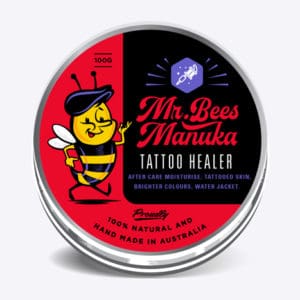
Bepanthen For Tattoo is very different then a specialised Tattoo cream, which is formulated with natural healing benefits for the skin. See Mr Bees Manuka Tattoo Healer here.
Looking thoroughly into the ingredients, 7 out of 11 ingredients in Bepanthen are not beneficial for healing, not being natural or organic and actually considered to be harmful to the skin.
With also half of these 7 ingredients having a unknown side effects from them.
Some Bepanthen users have experienced burning and stinging when applying Bepanthen on a wound.
Others have also experienced loss of colour from the tattoo, with peeling of the skin after using it.
Some Bepanthen users have experienced burning and stinging when applying Bepanthen on a wound. Others have also experienced loss of colour from the tattoo, with peeling of the skin after using it.
Using Bepanthen has also been known to cause pimples & spots over tattoos when healing, which also is a not a positive benefit for Bepanthen For Tattoo.
So What Is The Ingredients In Bepanthen Cream ?
Now lets look at the ingredients in Bepanthen & study whether these ingredients are good or not so good for your next Tattoo.
Ingredient 1. ( toxic ) Paraffinum liquidum
Paraffinum liquidum is a non natural mineral oil with a base being petroleum (petroleum is crude oil produced by gasoline).
Paraffinum is not beneficial for the skin as the substance of this ingredient cannot be absorbed by the skin. This means the skin is closed off & makes the skin hard to breathe, sitting on top & not absorbing well into the skin.
Ingredient 2. ( neutral no benefit ) Lanolin
Lanolin – is produced by the oil from a sheep. It forms a oily barrier on the skin. Lanolin is used in many skincare products. When a sheep is shorn there is oil in the glands beneath the wool that is used producing Lanolin Oil.
Ingredient 3. ( natural beneficial ) Aqua
Aqua – Aqua is water, a filler used in skincare products. People believe water is great in skincare products but really has no benefits for the skin and stays on top and doesn’t absorb into the skin.
Ingredient 4. ( toxic ) Petroleum Jelly
Petroleum Jelly – Petroleum as a ingredient is refined crude oil (produced by gasoline).
It is a substance refined and used in many skincare products and is used as a barrier. It is odourless and colourless and acts as a lubricant for machinery. Then refined and produced as Petroleum Jelly. This substance is so widely used and is not natural.
Ingredient 5. ( neutral no benefit ) Glyceryl Oleate
Glyceryl Oleate- Is a clear or light coloured oil made from teased oil, pecan oil, peanut oil and olive oil. It again is used to bind water & oils together to stop them for separating.
Ingredient 6. ( natural beneficial ) Prunus amygdalus dulcis oil
Prunus amygdalus dulcis oil – Sweet almond Oil which is derived from the oil from almonds which is packed with Vitamin A, Vitamin E, protein and Zinc. A great oil for skin cells and repairing your skin from damage.
Ingredient 7. ( toxic ) Cetyl Alcohol
Cetyl Alcohol – Is used as a emulsifier, thickener which keeps the water in the product and the oils from seperating.
Used frequently in cosmetics, it is a moisturising and fatty type of alcohol. Emulsifiers are when they blend oils & products together. This may cause redness and irritation in some people.
Ingredient 8. ( neutral no benefit ) Ozokerite
Ozokerite – Is a fossil & mineral (Can be a yellow or white colour) wax and is used as a texture enhancer in cosmetics, used primarily to make oils thicker.
Ingredient 9. ( natural beneficial ) Cera alba
Cera alba – beeswax is a natural wax produced by the bee hive.
Ingredient 10. ( toxic ) Stearyl alcohol
Stearyl alcohol- It is used also as a emulsifer, and is a fatty alcohol derived from stearic acid, coconut oil and vegetable fatty acids. Emulsifers in cosmetics may irritate the skin with some people.
Ingredient 11. ( natural beneficial ) Panthenol
Panthenol – This is Vitamin B5 which is beneficial for the skin. Great for hydration for wounds and areas.
The Results Are In When Using Bepanthen For Tattoo
Looking at the 11 ingredients to determine whether using Bepanthen for Tattoo is a good idea?
It may be easily determined by just looking at each ingredient, what type of benefit will you really receive.
Ask yourself, is it ok to use some some ingredients like Petroleum Jelly & Paraffinum liquidum to be rubbed or absorbed into your skin ?
7 out of the 11 ingredients are either toxic or offer you no benefit what so ever.
The other 4 ingredients do offer some benefits, but basically most of the ingredient content in Bepanthen, are not going to deliver to you any type of specialised healing when it comes to tattoo aftercare.
These 7 ingredients may also irritate your skin, everyone’s skin is different. Different skin types have different reactions to products, especially when skin has new Tattoos.
Many people spend big dollars on their Tattoos, so wanting to be sure your skin is going to receive benefits from the product you use is vital.
What Is Recommended As Aftercare For My New Tattoo?
Step 1.
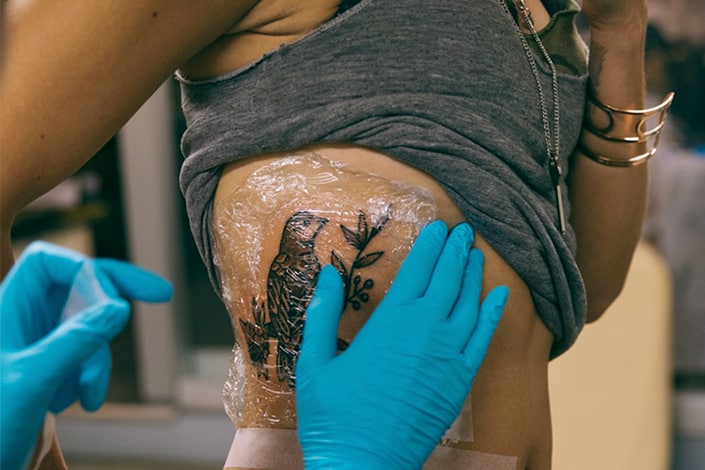
After your tattoo is completed, it is best to leave your bandage on for 24 hours.If it is falling off or becoming unstuck, you need to wash your tattoo.
To do this you need sterile water (this means boiled water) and is best not to use the sterile water hot or cold or use saline.
Also using a antibacterial wash as well, we recommend Phisoex. Then rebandaged your tattoo.
We recommend a brand called Opsite bandages (which you are able to purchase from Chemist Warehouse or most chemists).
Once the bandage is on, it’s best not to get it wet at all.
Step 2.
After 48 hours it is best to start applying a aftercare cream see Mr Bees Manuka link here under your bandage, you only need a very thin layer to begin with.
After 3-5 days your tattoo will be well on it’s way to being healed up, and you are then able to remove the bandage completely.
Mr Bees Manuka Tattoo Aftercare Cream is very effective and even better it is completely natural, and a cream you are able to continue with after your tattoo has healed.
It has the below ingredients as follows :
Manuka “antibacterial, antifungal, antihistamine, antiseptic;”
Leatherwood “antibacterial, antifungal, antihistamine, antiseptic;”
Zinc oxide “natural sunscreen & helps with redness & skin irritation;”
Jojoba Oil “natural sunscreen and antibacterial;”
Sweet Almond Oil “packed with vitamin E & A”;
Shea Butter “anti-inflammatory with high concentrations of fatty acids”;
DnL Panthanol “improves skin hydration, reduces inflammation & itching”;
Allantion “aids in wound healing smoothes skin”;
Avocado Oil “natural sunscreen and full of antioxidants & vitamins”;
Sunflower Oil “full of vitamin E”;